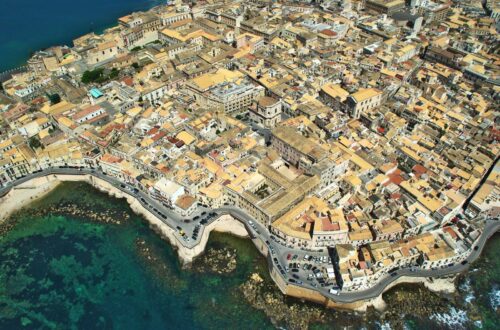
Things to do and see in Brucoli, on the Syracuse coast
Brucoli is a small fishing village on the Syracuse coast, a hamlet of Augusta, roughly halfway between Catania and Syracuse. You recognise it by the harbour canal, the low houses and the outline of the Aragonese Castle closing the entrance to the sea. It is not a noisy destination: people come here to walk, for the fish, for the water close at hand, and to have, in the evening, a quiet place to come back to.
This guide covers things to do and see in Brucoli: the canal and the caves, the Castle and the lighthouse, the streets with Vittorio Ribaudo’s murals, the Church of San Nicola, the Sanctuary of the Madonna dell’Adonai, the little beach and the patron saint’s feast. For day trips — Ortigia, Noto, Vendicari, Mount Etna, Taormina — there is a guide to what to see in Sicily starting from Brucoli.
From Villa Pantakyas, in contrada Gisira, the sea is about a ten-minute walk away. The village centre and the Castle are about a ten-minute drive.
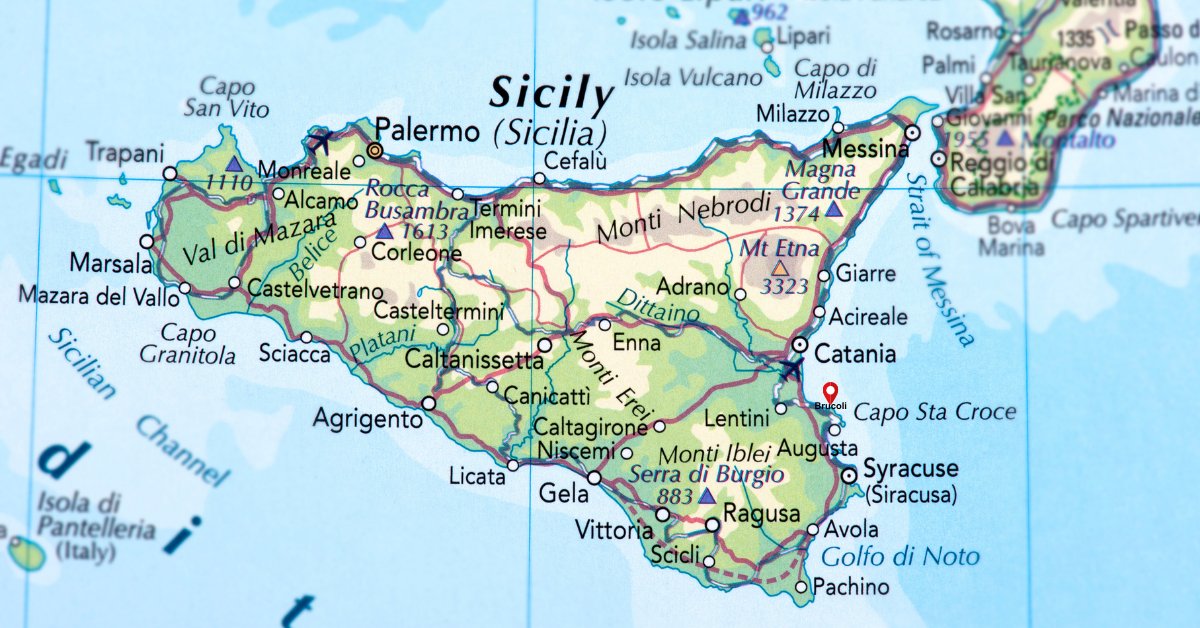
How to get to Brucoli
The nearest airport is Catania Fontanarossa, about 45-50 kilometres away. By car, the journey takes about 50 minutes; in high summer, or at peak hours, it is wise to allow a few minutes more.
A car is the simplest way to arrive and to get around in the days that follow, both into the village and out on trips around eastern Sicily. There are bus connections between the airport and Augusta, and from Augusta urban lines that can run towards Brucoli, but the timetables change and the services are not designed around a holiday itinerary. If you would still rather use public transport, check the latest times before you travel, and bear in mind that from contrada Gisira the last stretch is awkward without a car.
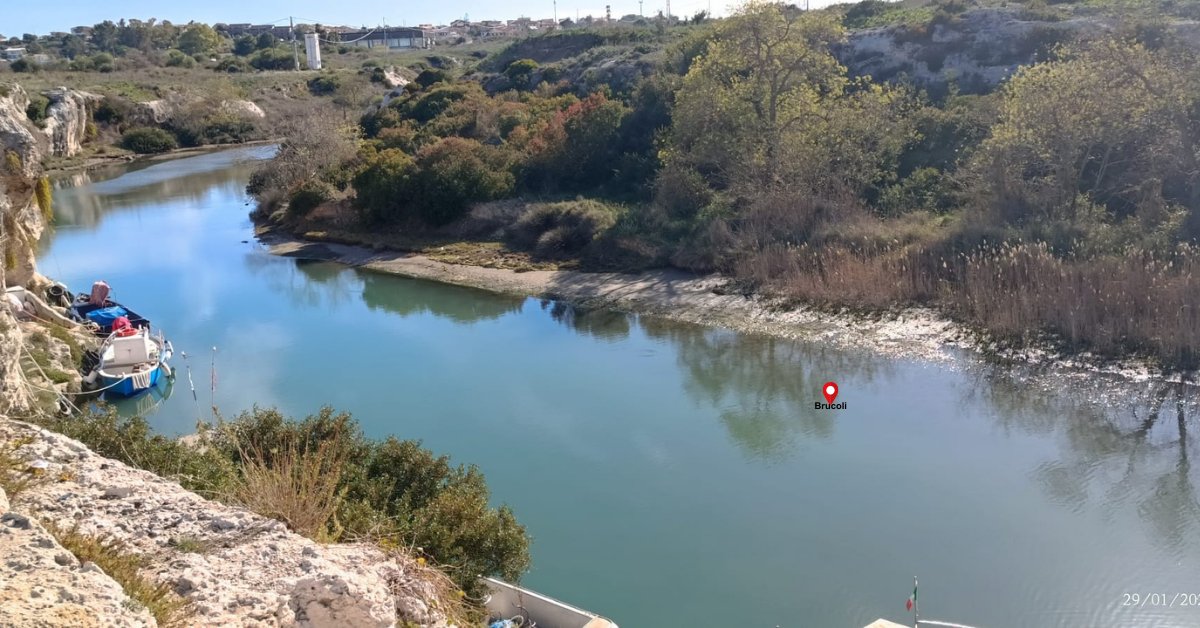
The harbour canal, the caves and the Gisira
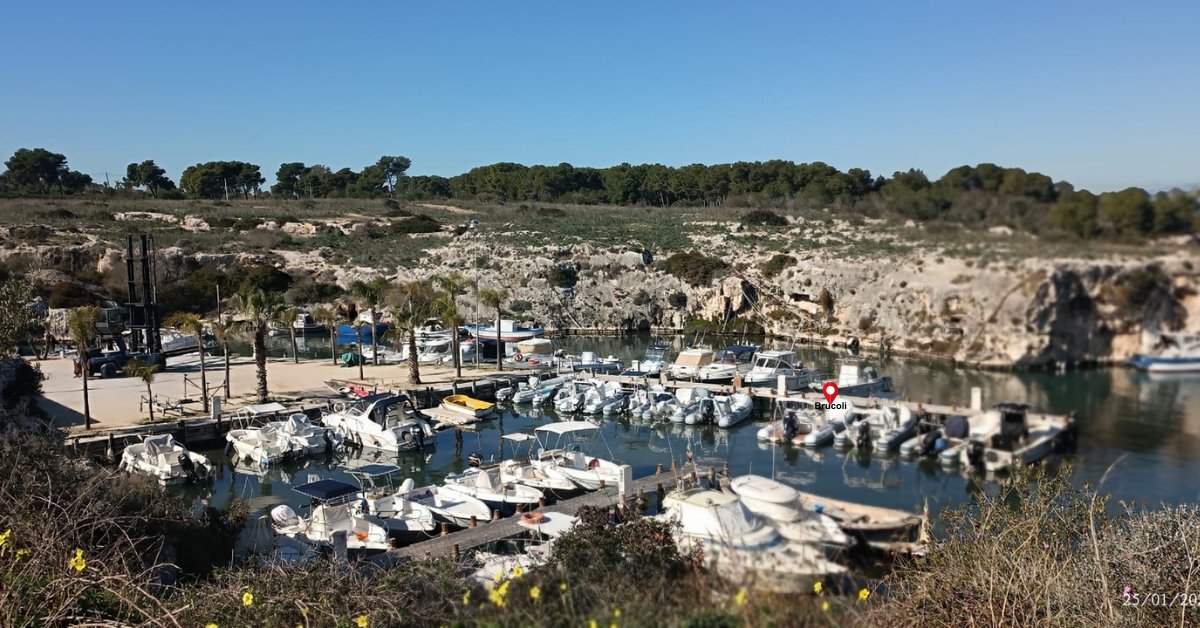
The heart of Brucoli is the harbour canal: a narrow arm of water between limestone banks, at the mouth of the Porcària stream, which the locals simply call “the canal”. You reach it on foot from the village, walk along the quays and watch the boats heading out to open sea. Many caves open in the rock faces. Some still show traces of ancient use; others have been reused over the centuries. They are best looked at from the banks, without going into cavities that are neither equipped nor lit.
West of the canal stretches the Gisira, a limestone plateau sloping down to the sea. Here, at the northern end, traces of a prehistoric settlement have been identified. According to a long-standing tradition, already taken up by Thucydides in the History of the Peloponnesian War (VI, 4), the first Greek colonists who arrived from Megara with the oikist Lamis are said to have stopped on this stretch of coast, at a place called Trótilon, by the river Pantakýās. The precise identification with today’s village or with the Gisira is still debated, and in any case it would have been a short stay, before the founding of Megara Hyblaea, a little further south. It helps to explain why this corner of the shore has a Greek name in the memory of the place — and why the villa is called Pantakyas — not to promise ruins to visit in the middle of the village.
The Aragonese Castle and the lighthouse
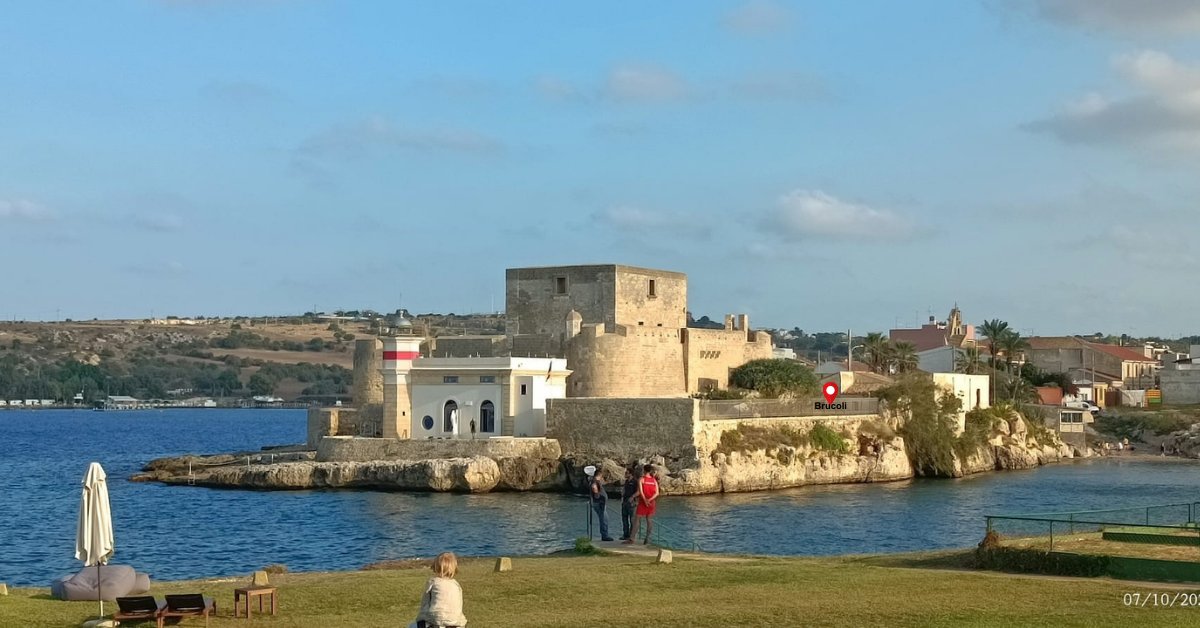
At the mouth of the canal stands the Castle of Brucoli, the village’s most recognisable monument. It is not a seventeenth-century building: the first core, the tower known as Cabastida, was built in 1467. The year before, King John II of Aragon had granted the port and the loading place to his wife, Queen Juana Enríquez, so that a defence could be raised there; Juana entrusted the work to Giovanni Cabastida, governor of the Queen’s Chamber, who came from Barcelona. The tower was meant to protect the traffic of the loading place, especially the grain leaving the port, and to close the entrance from the sea. Towards the mid-sixteenth century the structure was enclosed by a wall with four towers, and that is, in outline, the profile you still see today.
For years the interior has remained closed, or not regularly open to visitors, because of restoration work. Even seen from the outside, with the village on one side and the sea on the other, it remains one of the clearest images of this coast. Behind the Castle, in the narrow strip towards the water, stands the lighthouse of Brucoli, built in 1911. Before planning a visit inside, it is best to ask on the spot whether it is accessible on those days.
The village streets and Vittorio Ribaudo’s murals
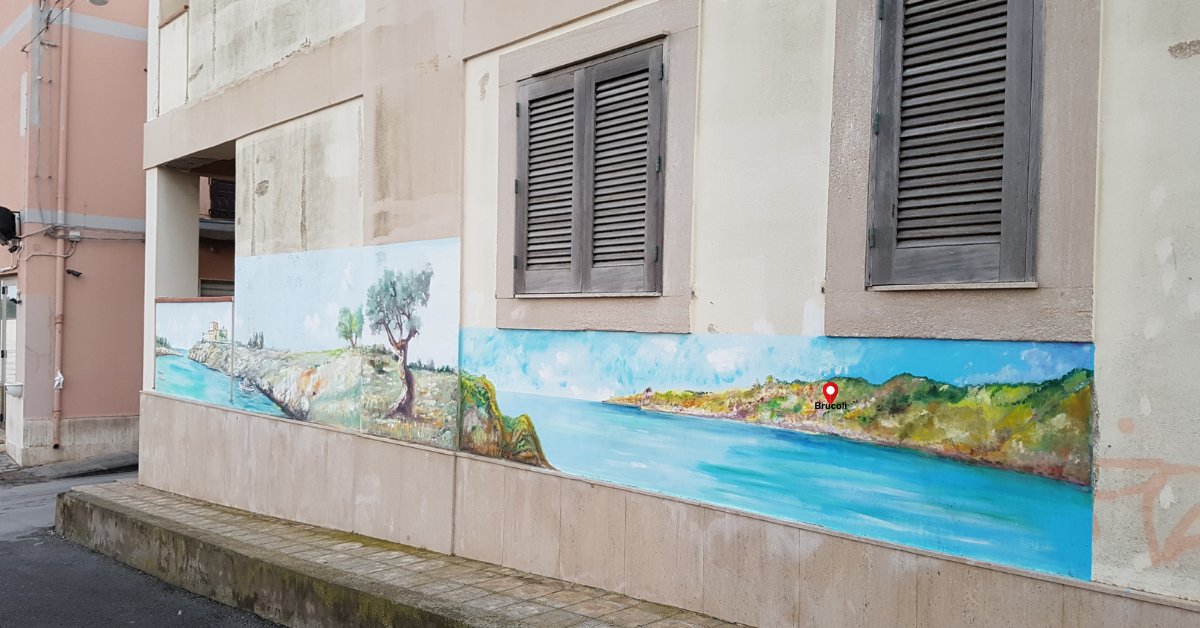
From the Castle you walk back into the streets of the village, low and close to the water, with pale façades and the few small squares where people stop to talk. What sets them apart from so many other coastal villages are the murals: scenes of fishing, of work and of everyday life painted on the houses, especially along the main street. They were painted, mainly between 2007 and 2008, by the artist Vittorio Ribaudo, born in Palermo and later at home in Augusta, who had turned Brucoli into a small open-air “city of art”. You walk without a fixed map: you only need to look up.
The Church of San Nicola
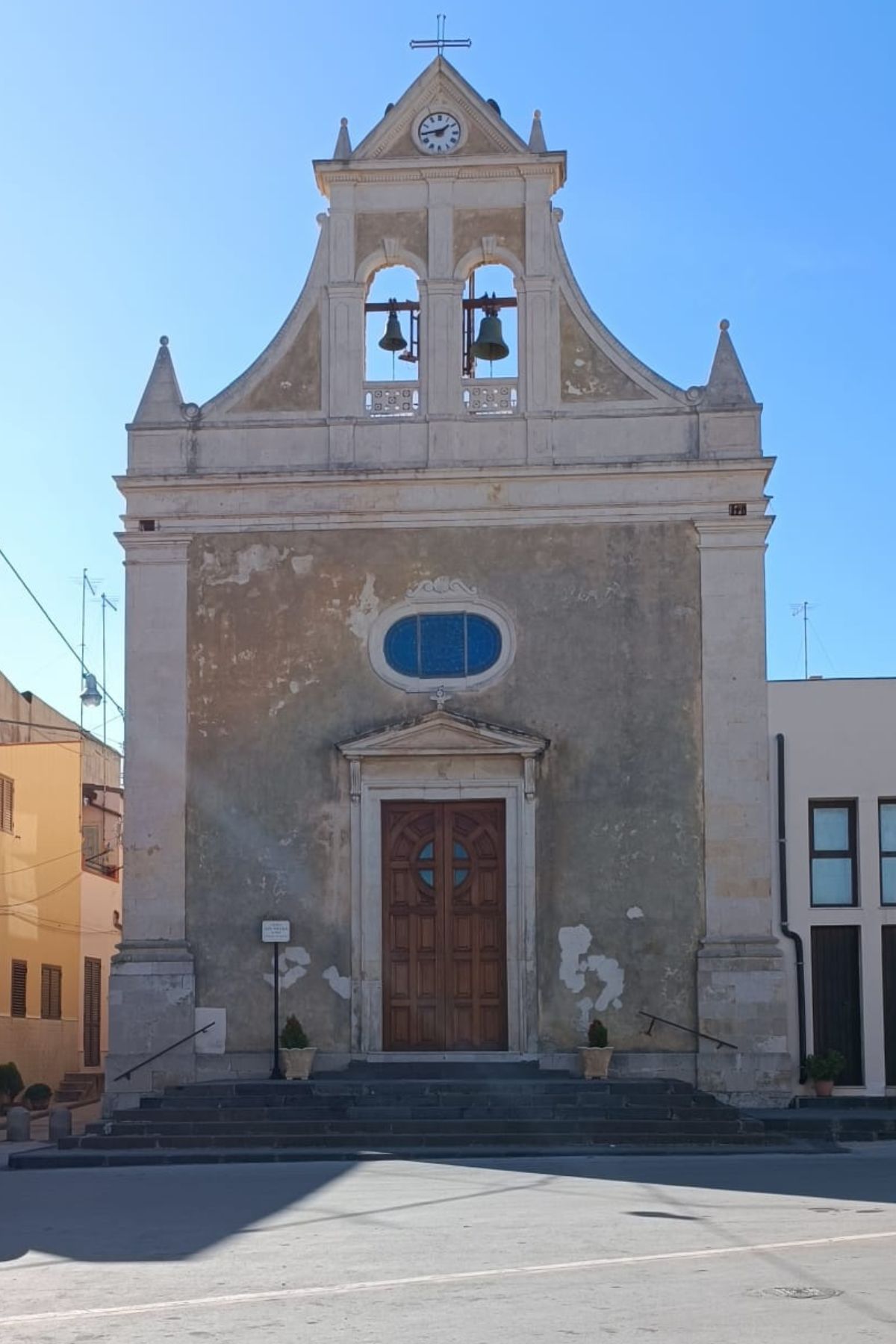
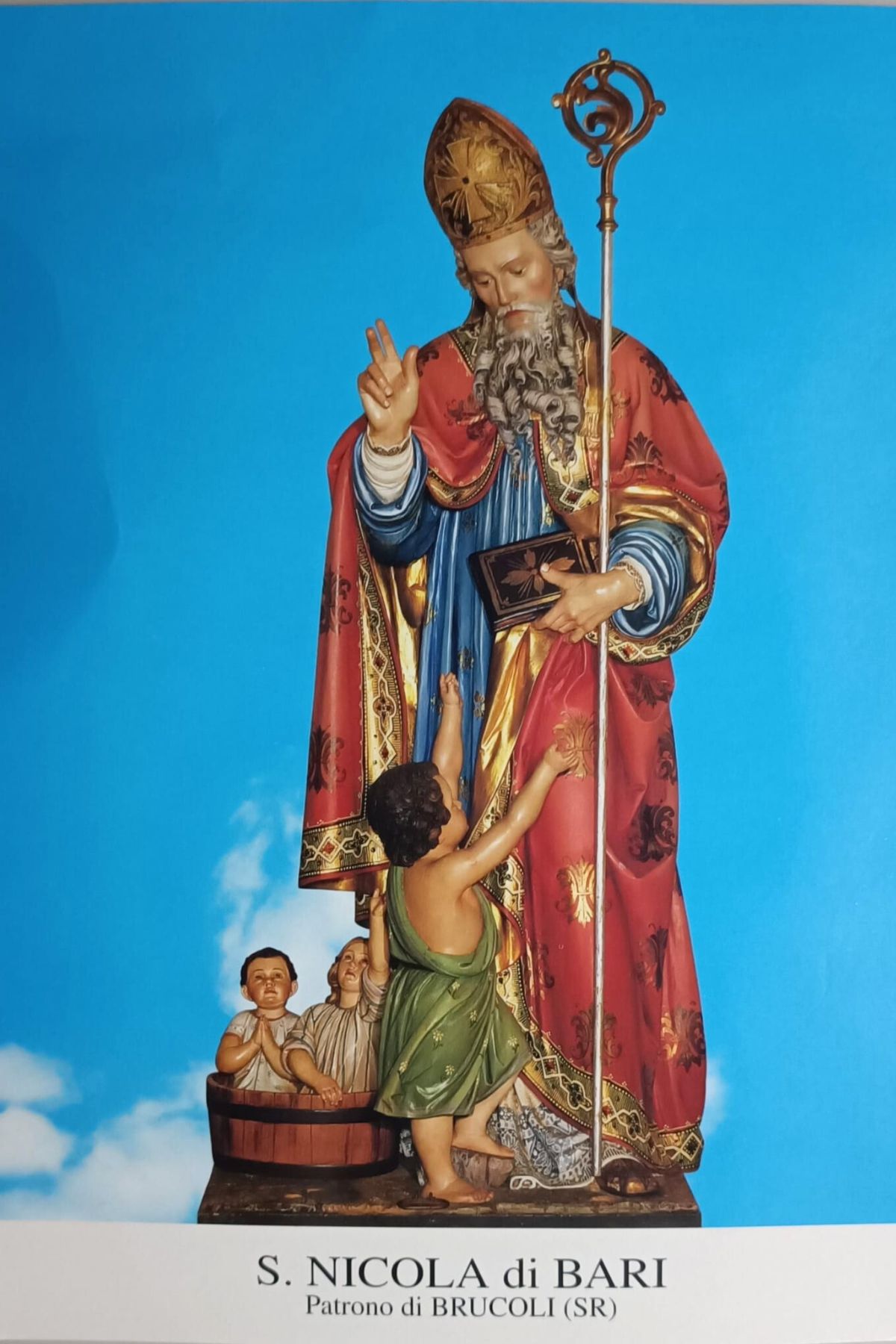
In the middle of the village, the Church of San Nicola di Bari is the parish church and the focus of the feast of the patron saint, protector of seafarers. It is a nineteenth-century building, with a single nave, built in several stages. According to local tradition, sailors caught in a storm called on the Saint, found shelter in the canal and, in thanks, gave the painting of San Nicola on his throne that is now the altarpiece of the high altar. Behind the painting is a nineteenth-century wooden statue, carried in procession on the days of the feast.
The church was damaged by the earthquake of 13 December 1990, reopened in a temporary form in 1997 and restored in 2005. It is not a monument on an art-history list, and that is precisely why it matters: it is the village church, and you go in if it is open, quietly, without a queue of visitors.
The Sanctuary of the Madonna dell’Adonai
A few minutes from the villa, still in contrada Gisira, stands the Sanctuary of Maria Santissima Mater Adonai, a place that many articles on Brucoli leave out and that is well worth a stop. The devotion is gathered in a cave, in a hypogeum already used in antiquity, with a fresco of the Madonna and Child painted on the rock. The dating of the image is debated; tradition regards it as one of the oldest Marian sanctuaries in Sicily. Later, a small monastic complex grew around the cave, more intimate today than monumental.
There is no public transport to get there: you go by car or, from contrada Gisira, with a short drive. Opening hours are limited and can change: the sanctuary usually receives visitors on Sunday afternoons, with a longer timetable in July and August, and on other days by arrangement for groups and pilgrimages. It is worth checking before you set out. Every 5 August, for the Madonna della Neve, a pilgrimage walks from the parish of Brucoli to the sanctuary.
The sea and the little beach
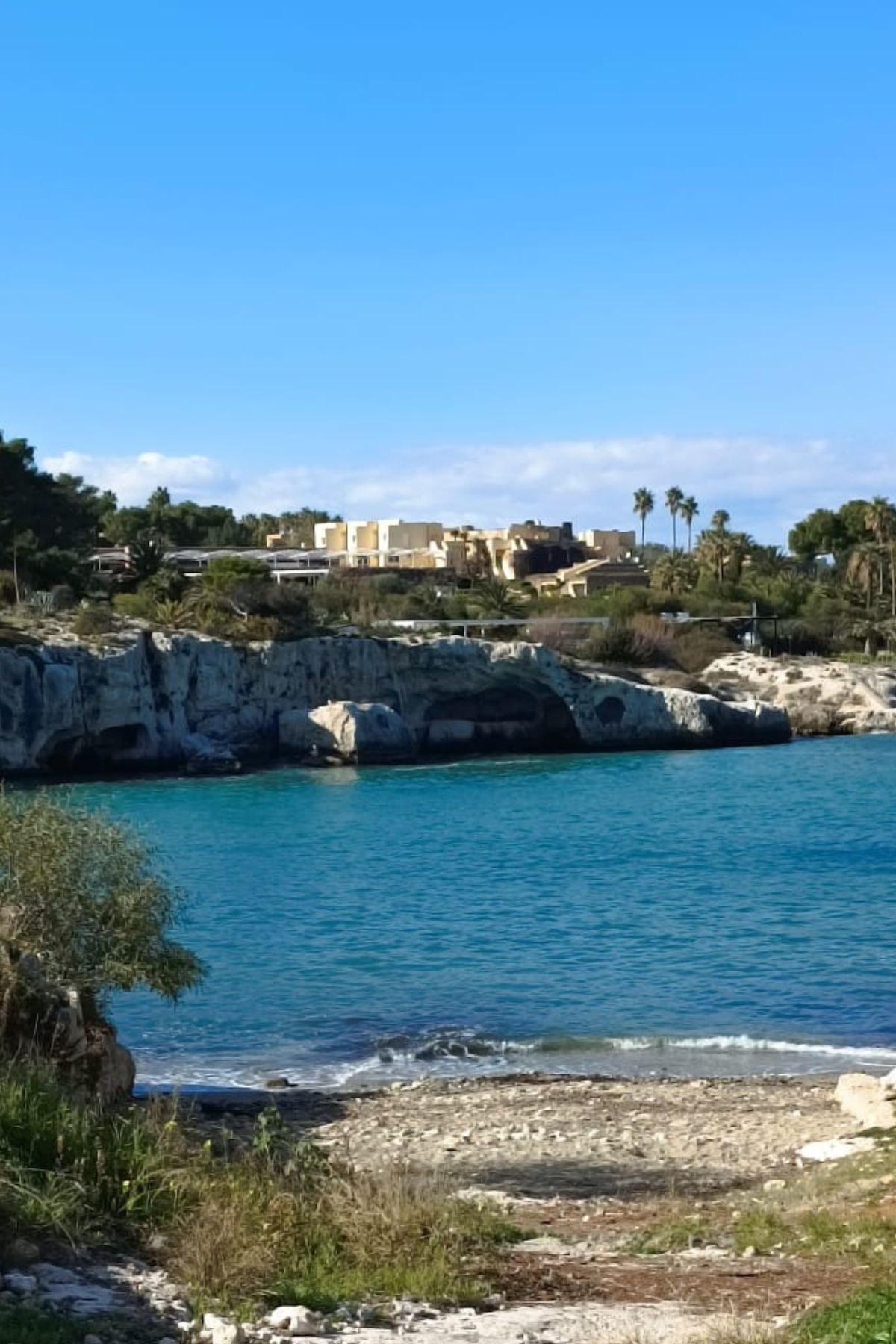
The little beach of Brucoli is small and, in summer, it is first of all the sea of the people who live here. It should not be imagined as a long beach with rows of umbrellas: it is a corner of shoreline, convenient if you are already in the village and want a swim without going far. From the villa, the sea is in any case about a ten-minute walk, even without going down to the centre first.
Along the coast, in the warm months, you can hire small boats to go out of the canal, see the Castle and the lighthouse from the water and look for a quieter spot to swim. It is something to do unhurriedly, in the morning or in the late afternoon, when the light is better and the canal less busy.
At the table, the fish from the harbour
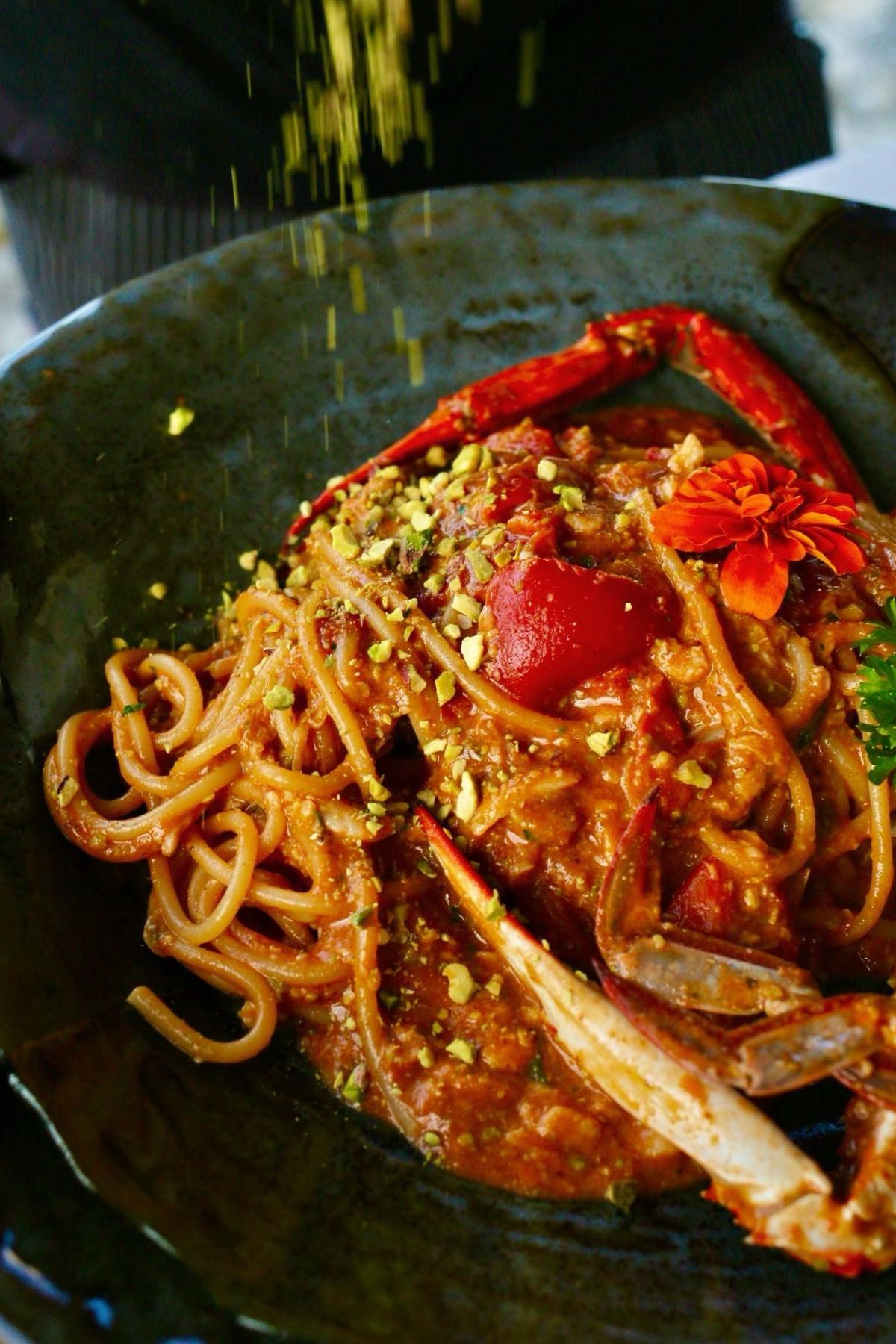
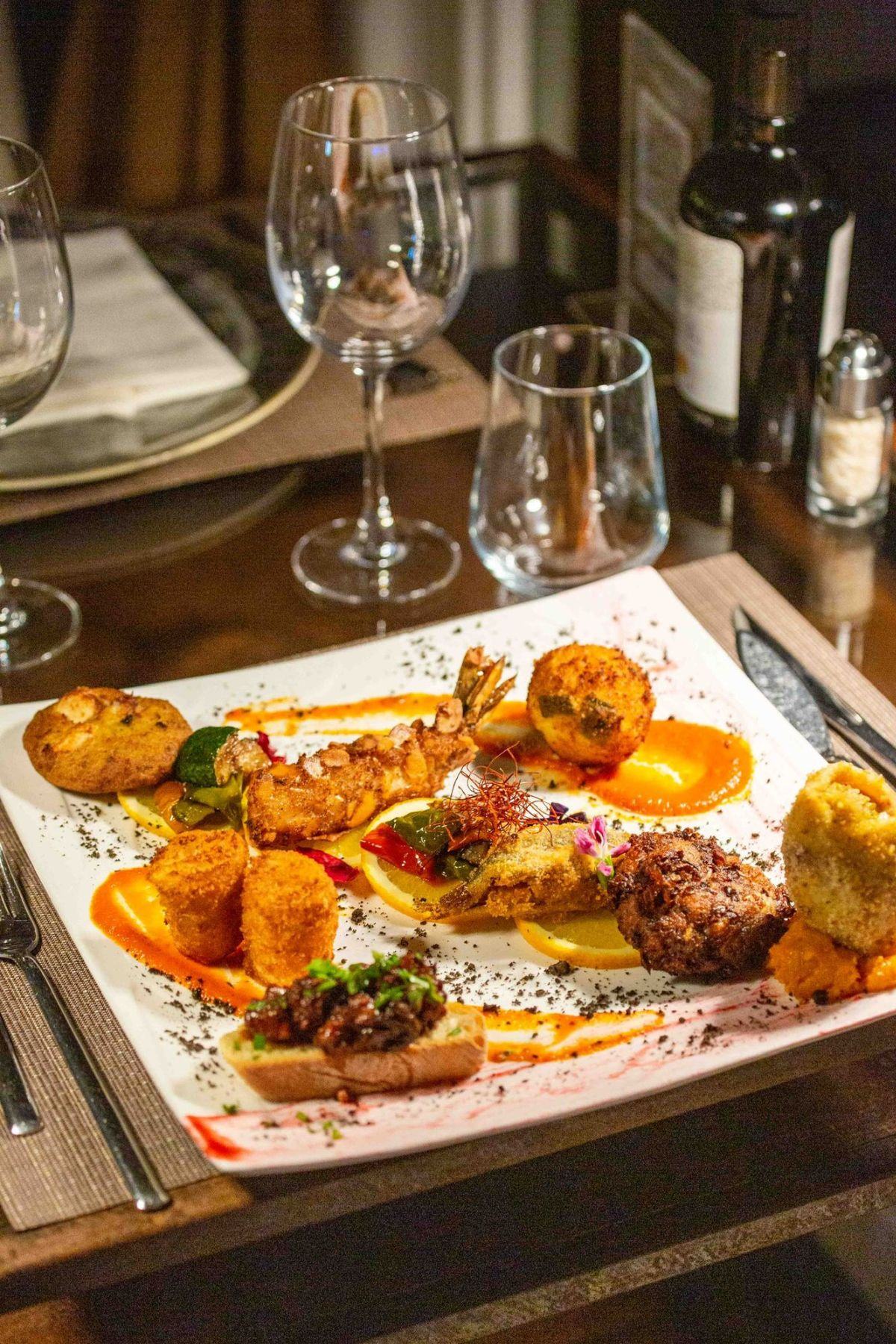
In Brucoli you eat mainly fish, in the simplest way: raw when it is fresh, with pasta, grilled, in soups. The restaurants and small places along the canal or near the Castle change a little with the season; in summer it is wise to book, especially in the evening. A well-known address in the village is the restaurant Al Castello, some of whose dishes you will find in the photographs below. It is not the only one, and part of the pleasure is also stopping for an aperitif in one of the village bars, when the streets fill without turning into a city.
Walks, summer and evenings
Around the village you can walk, along the coast and inland on the Gisira, with views of the sea and, when the air is clear, of Mount Etna. You do not need a marked trail or hiking gear: comfortable shoes, water and, in summer, a time of day that avoids the hottest hours.
In summer the centre becomes a pedestrian zone and the evenings grow longer: the bars come to life, there is music now and then, you stroll through the streets and go back to sleep a few steps away. It is the life of a small village in season, not a city nightlife. Outside July and August everything grows quieter, and it is a season many guests prefer.
The feast of San Nicola
The liveliest moment of the year is the feast of the patron saint, San Nicola. The celebrations usually fill the last days of July and reach their height on the last Sunday of the month: a procession through the village streets, with the “ballata del Santo” — the statue carried on shoulders and rocked as if among the waves — and performances and events that fill the village. In alternate years the procession also takes place at sea: a convoy of boats accompanies the Saint and, offshore, a laurel wreath is left in memory of those lost at sea. If you are in Brucoli on those days, it is worth staying in the evening rather than planning a trip farther afield. The exact programme changes every year: you look at the one published by the Municipality of Augusta or by the parish.
Frequently asked questions
What is there to do in Brucoli in one day?
A walk along the harbour canal and below the Castle, the streets with Ribaudo’s murals, the Church of San Nicola if it is open, a swim at the little beach or a fish lunch. If you are in contrada Gisira, add the Sanctuary of the Adonai, after checking the opening time.
How far is the sea from Villa Pantakyas?
About a ten-minute walk.
Can you visit the Castle of Brucoli?
The fortress is very clearly seen from the outside, together with the lighthouse. The interior, under restoration for years, is not necessarily open: it is best to ask on the spot during your stay.
What is there to see nearby, once you leave Brucoli?
Syracuse and Ortigia, Noto, Vendicari, Mount Etna, Catania and Taormina are all day trips. Times and one possible way of shaping the week are in the guide to what to see in Sicily starting from Brucoli.
A base in Brucoli, between the villa and the B&B
Francesco and Daiana welcome you in Brucoli in two different houses, depending on how you prefer to travel. At Villa Pantakyas, in contrada Gisira, there are the private pool, the garden and the view of Mount Etna, and the sea is a ten-minute walk away. At B&Brucoli, in contrada Bongiovanni, at the edge of the village, there are five rooms and breakfast, convenient if you are looking for a lighter arrangement. From either house you reach the canal and the Castle in a few minutes, and eastern Sicily is a day trip away.
For information, for WhatsApp (+39 348 731 7616) or to check availability, you can write to Francesco and Daiana.

You May Also Like