What to eat in eastern Sicily
If you ask us what to eat in eastern Sicily, we’ll warn you right away: we can’t give you just one dish. We’ll give you at least ten.
We’re Daiana and Francesco, and in Brucoli we welcome you at Villa Pantakyas and at B&Brucoli. For us, a holiday in Sicily is also, very much, about the table.
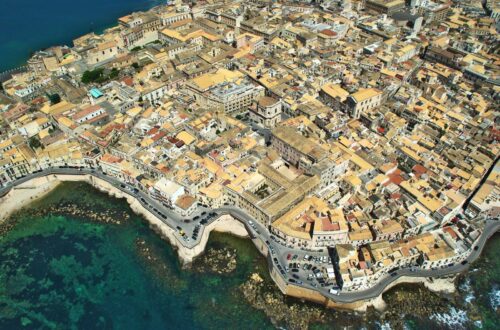
Brucoli is a great base, and that goes for the table too. It sits halfway between Catania and Syracuse, on a quiet stretch of the Ionian coast. From here, the specialties of Catania and Syracuse, the village fish, the granita of Noto and the produce of Etna and the Val di Noto are all just a day trip away.
Eastern Sicilian cooking brings so much together: street food from the rosticcerie, the classic pasta dishes of Catania, fish from the shore, typical Sicilian sweets, and wines grown on the volcano’s lava or further south, toward Avola. In this guide we’ll share the typical dishes of eastern Sicily we think you really shouldn’t miss, and where to try them starting from here. If you’re still planning your day trips, you’ll find everything in our guide on what to see in Sicily from Brucoli. And for the village itself, there’s our guide to Brucoli.
Catania street food: arancini, cipolline and scacciata
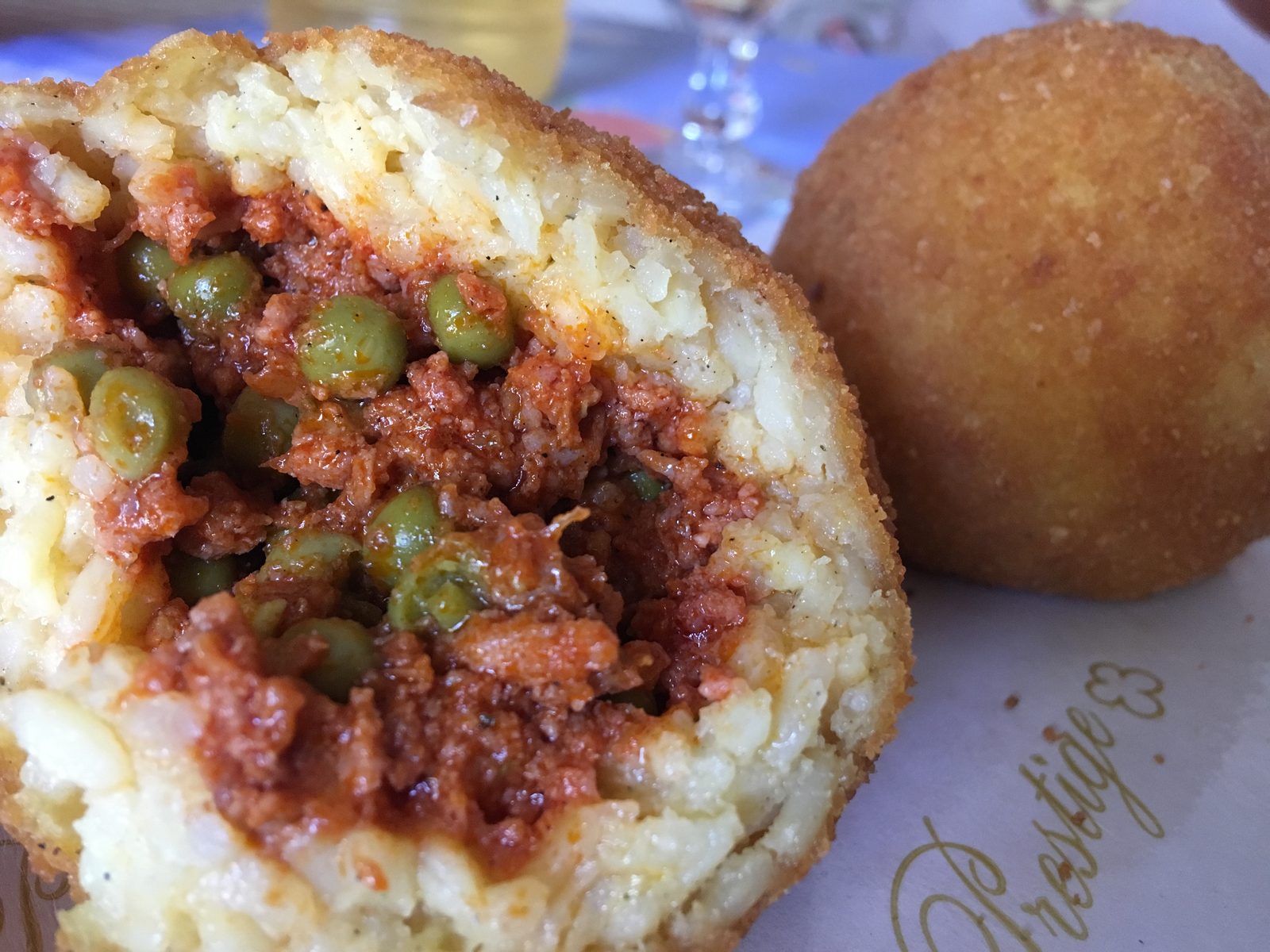
Let’s start with the king: the arancino. In Catania, about fifty minutes from Brucoli, Sicilian street food is bought at the rosticceria, often still warm.
And here’s a fun fact: on this side of the island people say arancino, masculine. In many Catania fry shops it’s shaped like a cone, like a little Mount Etna. In Palermo, on the other hand, they say arancine, and they’re usually round. The classic filling is ragù with peas, but you’ll also find them with butter, ham and mozzarella, with pistachio or with fish.
Why we love it: you eat it standing up, wrapped in paper, on your way into the city or on your way back. Simple, warm, perfect. Our favorite? Arancino al ragù, the classic.
Next to the arancini, you’ll find the whole rosticceria family in the window. Here are the ones to know:
- Cipollina: a little puff pastry parcel with onion, tomato, mozzarella and ham.
- Cartocciata: closer to a closed, stuffed pizza, baked in the oven.
- Iris: fried and filled with ricotta or chocolate cream.
- Scacciata: a flat, stuffed focaccia, often with broccoli or cauliflower, tuma or primo sale cheese, black olives, and sometimes sausage or anchovies. It’s tied to the Feast of the Immaculate Conception and to Christmas, but today you’ll find it out of season too.
If you’re curious, Catania has another old tradition too: around the Pescheria, the fish market, and in some parts of the old town there are butchers and little places that cook horse meat. It’s not for everyone, we know, but it has been part of what people eat in Catania for generations.
Pasta alla Norma, Catania’s own dish
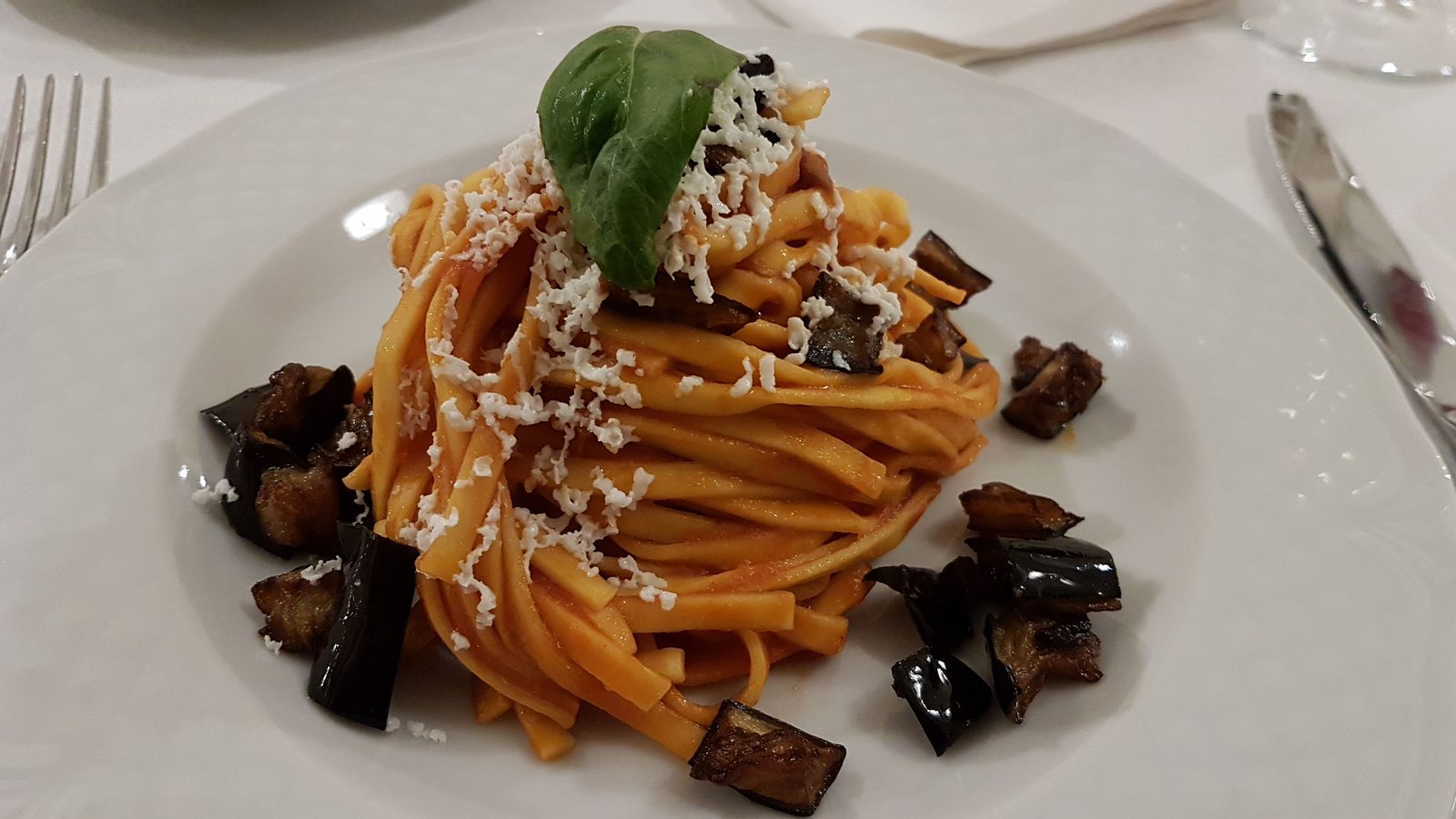
If one pasta dish tells the story of Catania, it’s pasta alla Norma. Tomato, fried eggplant, basil and a generous snowfall of grated salted ricotta. That’s it, and it’s a masterpiece.
According to tradition, the name comes from Norma, the opera by Vincenzo Bellini, the great composer from Catania: a dish worthy of an opera, in other words a masterpiece. You’ll find it in trattorias and restaurants all over eastern Sicily, not just in Catania, and of course people make it at home.
Our tip: look out for the salted ricotta, made from sheep’s milk. It’s what brings together the sauce and the sweetness of the eggplant. Without it, it’s not Norma.
Fish from the coast, from Brucoli to Syracuse
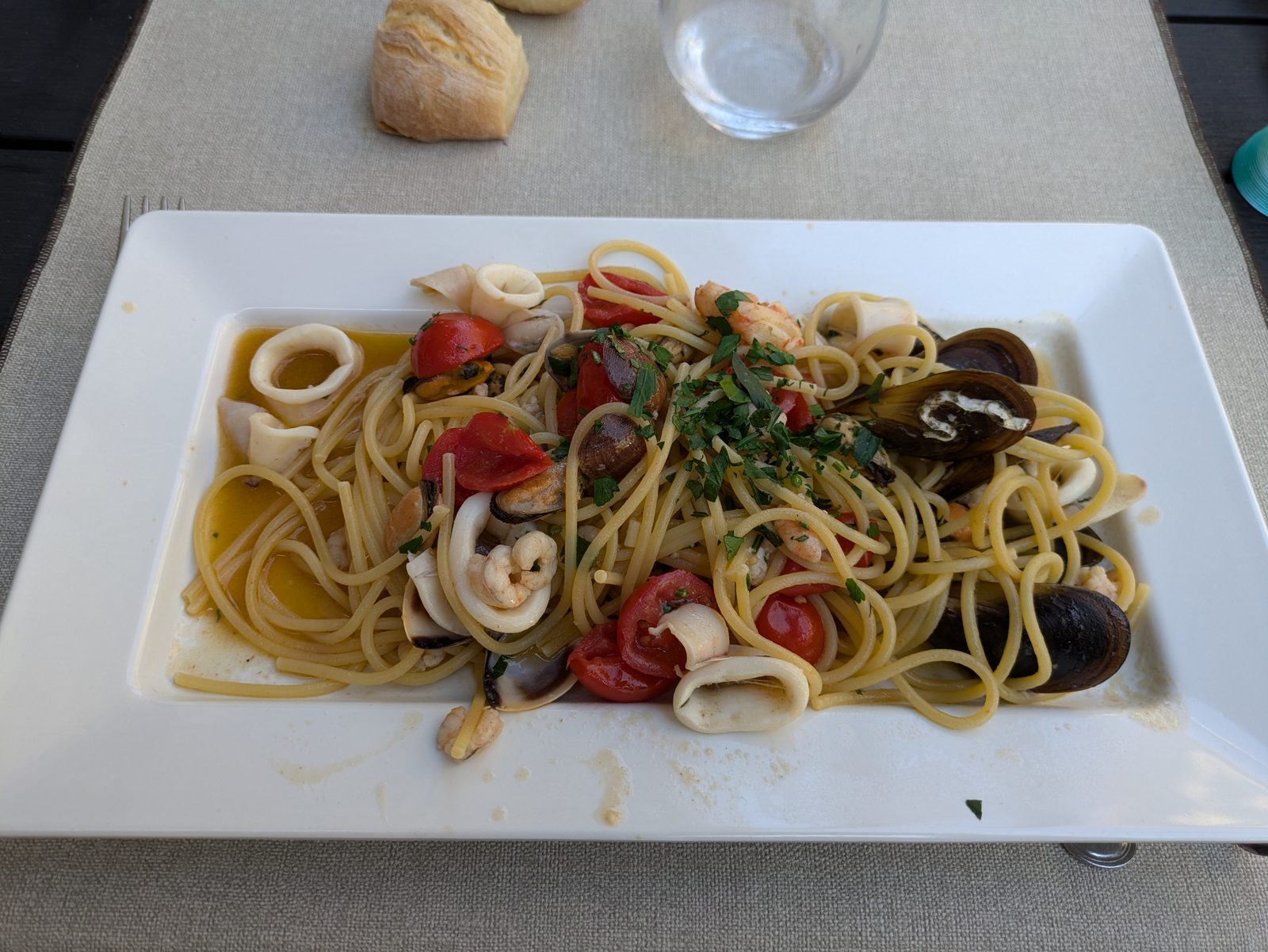
Along the Ionian coast, the sea comes into the kitchen every single day. The star is swordfish. Swordfishing has a long history, especially in the Strait of Messina, but it’s cooked all along the east coast: grilled, rolled into involtini with breadcrumbs and capers, or with pasta, often with tomato, wild mint or wild fennel.
In the right season, sea urchins also arrive on the table, best enjoyed simply, along with crudo, raw prawns, langoustines or just-caught fish. Here there’s only one rule: the less you add, the better.
In Syracuse and Ortigia, about 45-50 minutes away, the catch of the day is the most natural choice for lunch or dinner, after a stroll around the island. And in Brucoli, a seaside village, fish is simply home cooking: in town, a well-known spot is the restaurant Al Castello. If you’d rather stay close to the villa or the B&B in the evening, there’s no need to go far for dinner by the harbor canal.
Granita and brioscia, breakfast in eastern Sicily
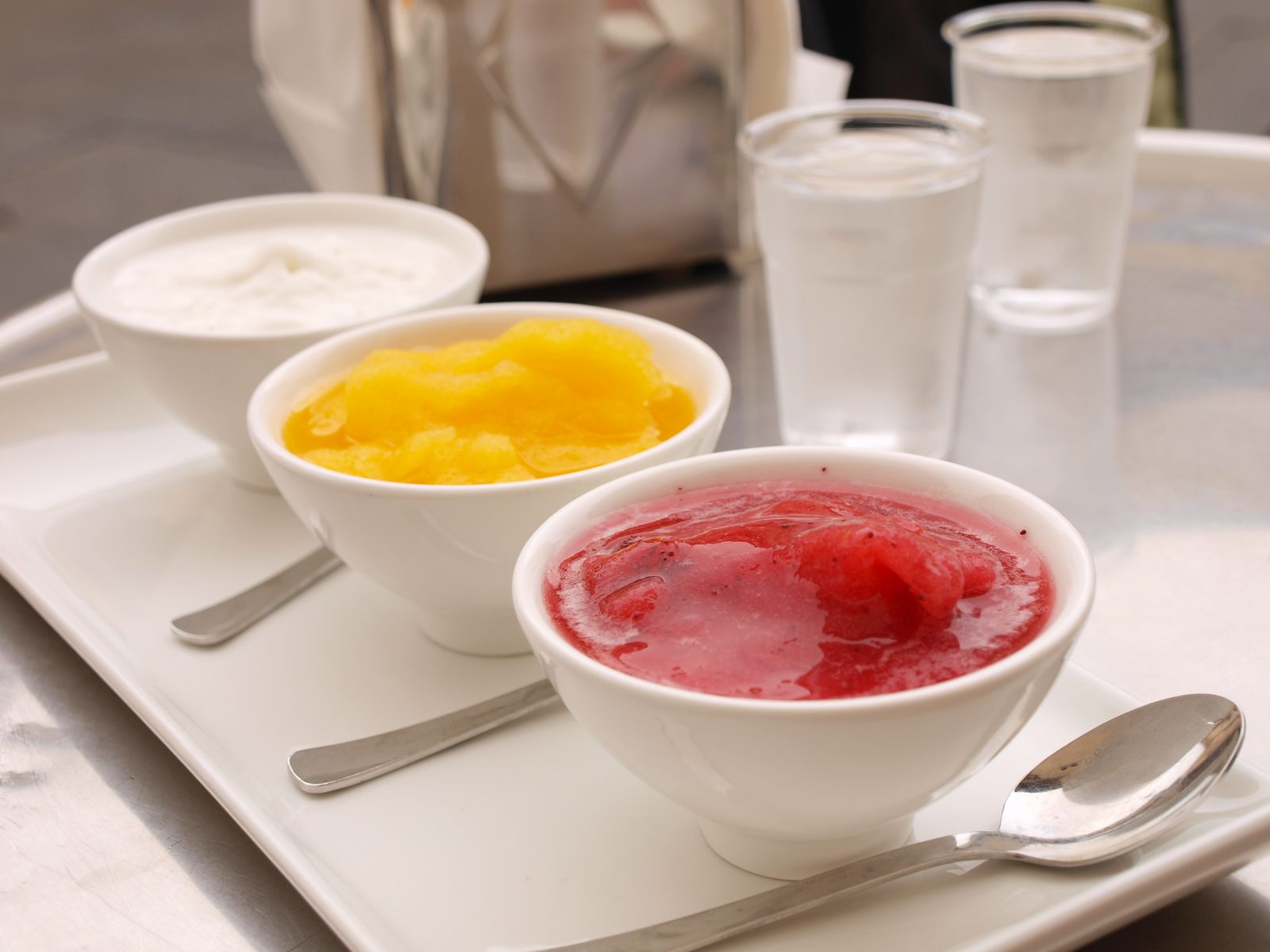
And here we are at one of the best moments of a Sicilian day: breakfast. What to eat in eastern Sicily in the morning, at least in summer? Granita and brioscia. No discussion.
The brioscia col tuppo is the soft bun with a little “hat” on top. You tear it and dip it into the granita, or you fill it. The most loved flavors are almond, lemon, coffee, strawberry, mulberry, chocolate and pistachio. And it’s not an after-dinner dessert: in many towns along the coast, from Catania to Noto, it’s the first thing in the morning, or a break in the middle of the day when the heat rises. Our favorite flavor? Lemon granita.
In Noto, about an hour from Brucoli, granita has a very special reputation, and the same goes for the cafés of Catania and the Etna riviera. In winter granita gets harder to find, but some places keep serving it. Still, the real season is the warm one.
Typical Sicilian sweets: cannoli, cassata and ricotta
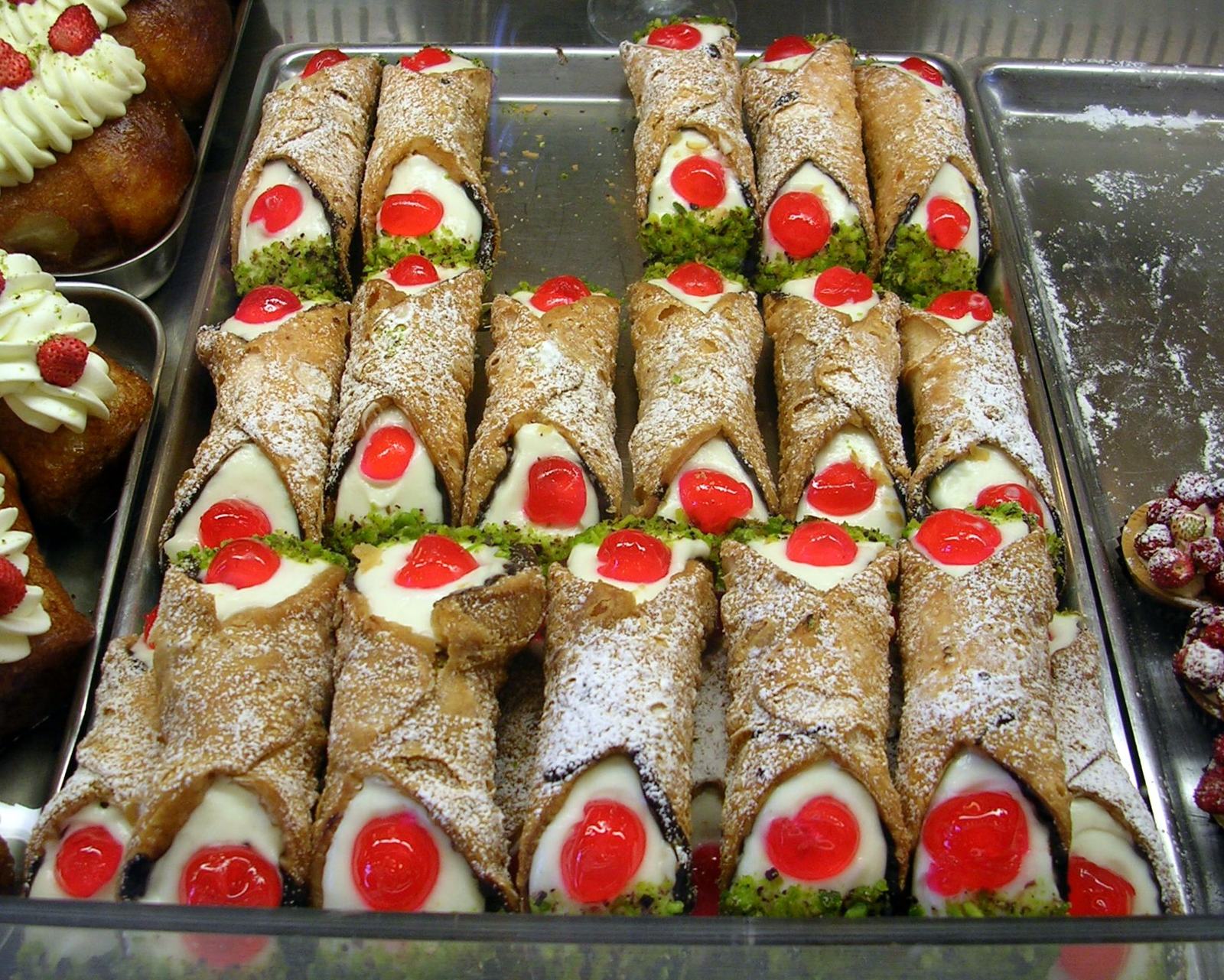
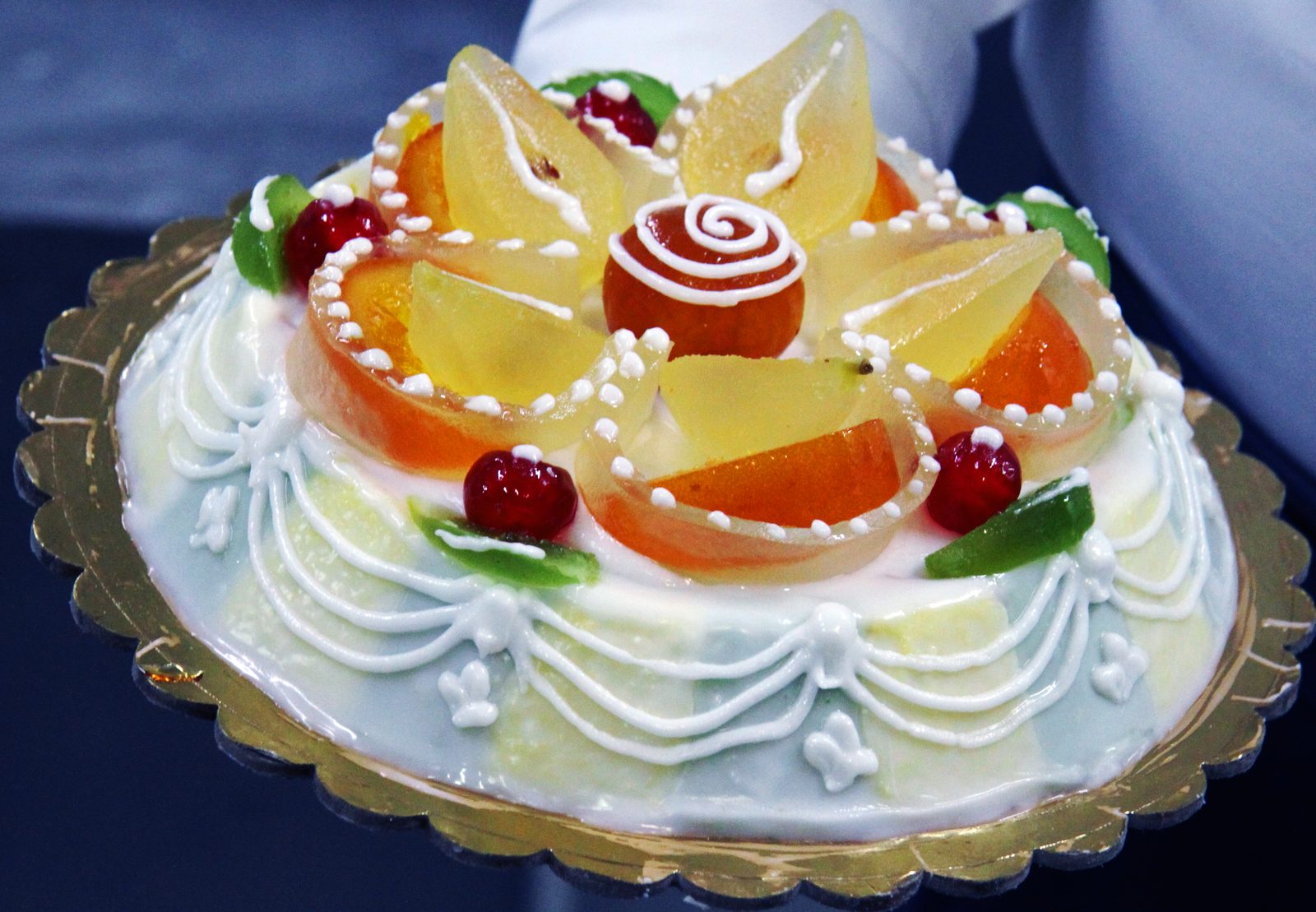
Cannoli and cassata belong to the whole island, and in eastern Sicily you’ll find them in almost every pastry shop. If you can’t resist ricotta, you’re in the right place.
A cannolo is a fried shell, filled on the spot with sieved, sweetened sheep’s milk ricotta. It’s finished with candied orange peel, chocolate or chopped pistachio, here often from Bronte. Cassata is more solemn: sponge cake, ricotta, almond paste and candied fruit. It comes from the same idea, ricotta as the heart of the dessert, and it’s served above all on holidays.
Fresh ricotta isn’t just for desserts, though. It goes into pasta dishes, and it’s eaten on its own, still warm, when you’re lucky enough to find it freshly made. It’s one of the threads that ties eastern Sicilian cooking together, from savory to sweet.
Bronte pistachio and the flavors of Etna
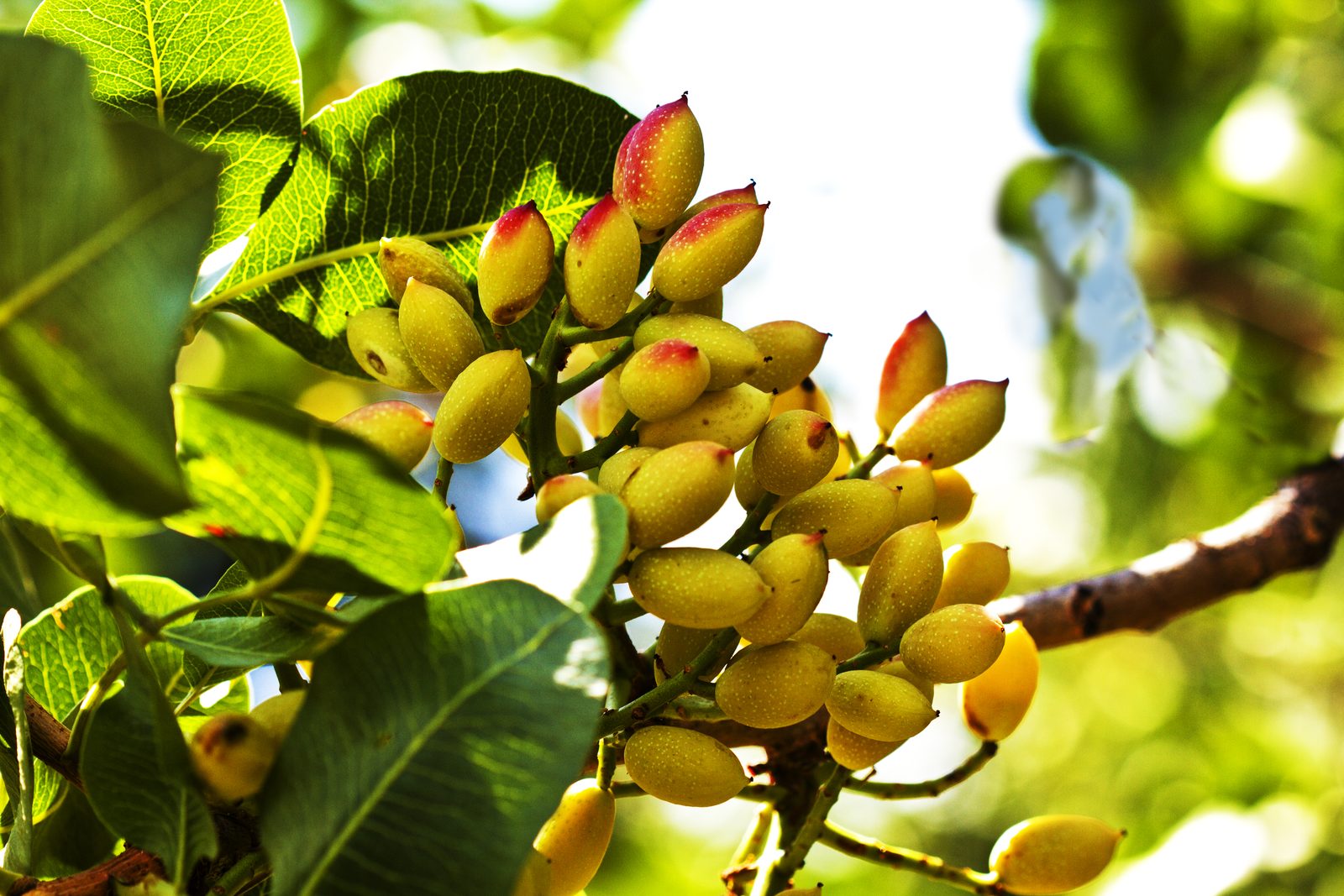
On the western lava slopes of Etna, in the towns of Bronte, Adrano and Biancavilla, they grow the green pistachio of Bronte, which has PDO (DOP) status. You’ll recognize it right away by its intense color and aroma, whether it’s in pasta, pesto, gelato, granita, cannoli or torrone.
You can pair Bronte with your day on the volcano. From Brucoli, Rifugio Sapienza on the south side is about an hour and a half or a little more. The pistachio town is on the other side, a bit further on: it’s worth the detour if your route allows.
Cherry tomatoes, almonds and chocolate: the produce further south
As you head down toward the Val di Noto, the fields change, and so does what ends up on the table.
Pachino tomatoes (PGI) are grown around Pachino, Portopalo di Capo Passero, Ispica and Noto, in four types: cherry, round smooth, ribbed and on the vine. They’re the little tomatoes that color sauces, salads and raw fish dishes all over the province.
In Avola, not far from Noto, some of the most sought-after almonds in Italy are grown: above all the pizzuta d’Avola, along with fascionello and corrente, also called romana. They don’t have a European designation, but they’re a traditional Sicilian product, looked after by a protection consortium. Almond paste is used for the little pastries you’ll see in the windows of Noto and Syracuse. And the same almonds make latte di mandorla, the cold almond drink of summer, and one of the most typical granita flavors.
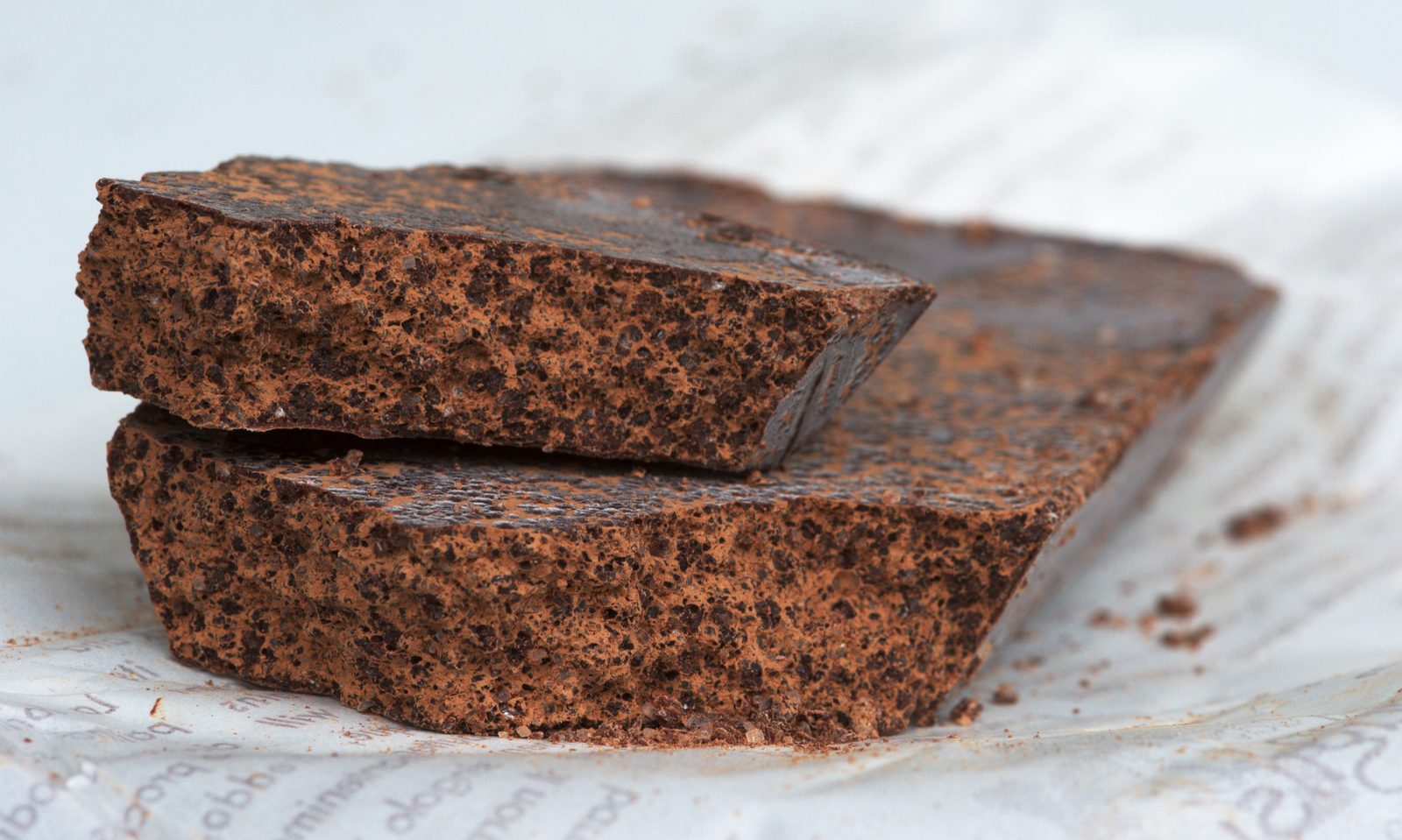
Further inland, in the Hyblaean hills, about an hour and three quarters from Brucoli, is Modica, the town of cold-worked chocolate (PGI). It has that special grainy texture you can feel between your teeth. You can taste it plain or flavored with vanilla, cinnamon, salt, chili or citrus, and it makes a perfect souvenir to take home. The same area also produces ragusano, a PDO stretched-curd cheese. And staying between Syracuse and Etna, in winter the markets fill up with Syracuse lemons (PGI) and Sicilian blood oranges (PGI).
Etna wines, Nero d’Avola and Moscato di Siracusa
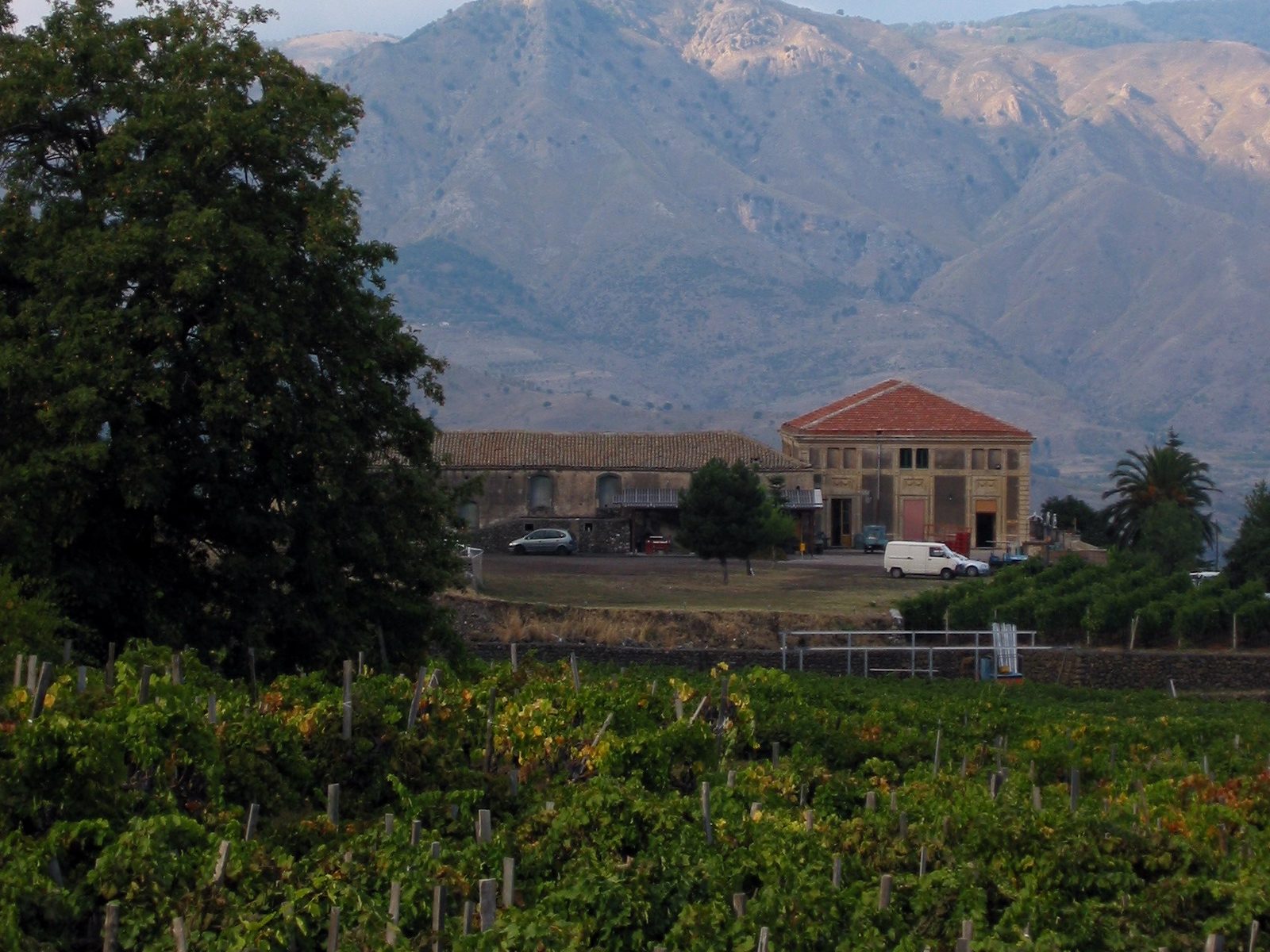
A Sicilian table isn’t complete without a glass of wine. Since 1968, Etna has been the oldest DOC (controlled designation of origin) in Sicily. On the slopes of the volcano, the reds are made mostly from nerello mascalese, often with a little nerello cappuccio, and the whites from carricante. These are mountain wines born from lava, worth trying if you spend a day on Etna.
Nero d’Avola, on the other hand, takes its name from Avola, in the province of Syracuse. Today it’s grown all over the island, but it was born on this southeastern coast. Syracuse and Noto also keep a rarer tradition alive, sweet moscato: Moscato di Siracusa and Moscato di Noto, dessert wines made in small quantities. You don’t need to be an expert to pair them with something sweet. Just ask for a glass and let them tell you about the vintage.
What to eat in Brucoli, Catania and Syracuse: how to plan it
With a few days in Brucoli you can taste a lot without rushing. Here’s the rhythm we suggest:
- A fish dinner in the village, on your first evening or whenever you feel like staying close.
- A morning or an afternoon in Catania for street food and, if you still have the energy, a pasta alla Norma.
- Syracuse and Ortigia for fish and a stop at a pastry shop.
- Noto for granita and almonds and, if it’s a long day, a stop toward Pachino or Marzamemi.
- Etna for the wines and, if your route allows, Bronte pistachio.
Driving times are the same as in our day trip guide: Catania about 50 minutes, Ortigia about 45-50, Noto about an hour, Modica about an hour and three quarters, Etna about an hour and a half or a little more. In summer, give yourself some extra time.
Frequently asked questions
What to eat in eastern Sicily in a week?
Arancini and rosticceria in Catania, at least one pasta alla Norma, fish in Brucoli or Ortigia, granita and brioscia, a cannolo or a slice of cassata. And if you head inland or south, Bronte pistachio, Modica chocolate and a glass of Etna or Nero d’Avola. It’s not all of Sicily, but it’s already a very full table.
What to eat in Catania in one day?
Street food from the rosticcerie (arancini, cipollina and, in season, scacciata) and a pasta alla Norma. If you’re in the center, the Pescheria gives you a taste of the city’s character at the table too. For breakfast or a break, granita and brioscia.
What to eat in Syracuse and Ortigia?
The catch of the day, a crudo if you find it fresh, and something from the pastry shop. Ortigia is perfect for a slow lunch, before or after a stroll between the Cathedral and the Fountain of Arethusa.
Can you eat well in Brucoli, or do you need to go further?
In Brucoli you mostly eat fish, and the village is easy for dinner without a car or with just a few minutes’ drive. For Catania street food, the granita of Noto or Etna wines, though, it’s worth heading out, just like for the day trips.
Can you find granita all year round?
The real season is the warm one. In winter some cafés keep it, especially the most popular flavors, but it’s not a given. Brioscia, on the other hand, is always there.
Is it arancini or arancine?
In eastern Sicily, and in Catania in particular, we say arancini, masculine. Arancine is the form used most in Palermo and western Sicily. The shape and the filling can change, but the rice, often scented with saffron, and the frying stay the same.
A base in Brucoli, between the villa and the B&B
After all these delicious day trips, it’s lovely to have a place to come back to. In Brucoli, we welcome you in two different homes, depending on how you like to travel.
At Villa Pantakyas you’ll find a private pool, a garden and a view of Etna, and the sea is a ten-minute walk away: in the evening you can cook for yourselves or walk down to the village. At B&Brucoli, on the edge of the village, there are five rooms and breakfast, handy if you’re looking for something more flexible. From either one, discovering what to eat in eastern Sicily is all about short day trips and getting home without rushing.
For information or to check availability, you can write to us.
Enjoy, and buon appetito!
Daiana and Francesco

You May Also Like
Things to do and see in Brucoli, on the Syracuse coast